Vehicle acquisition
Collect location and vehicle-network signals with the TBOX or data controller. Local storage buffers records; the configured upload cycle determines the remote data refresh.
EQUIPMENT / PROJECT DEVELOPMENT
From onboard data acquisition to fleet operations, diagnostics, updates and lifecycle records. Define the connected-service package around the equipment, operator and service workflow.
Configuration, availability and destination-market documentation are confirmed for each project.
TECHNICAL OVERVIEW
Collect location and vehicle-network signals with the TBOX or data controller. Local storage buffers records; the configured upload cycle determines the remote data refresh.
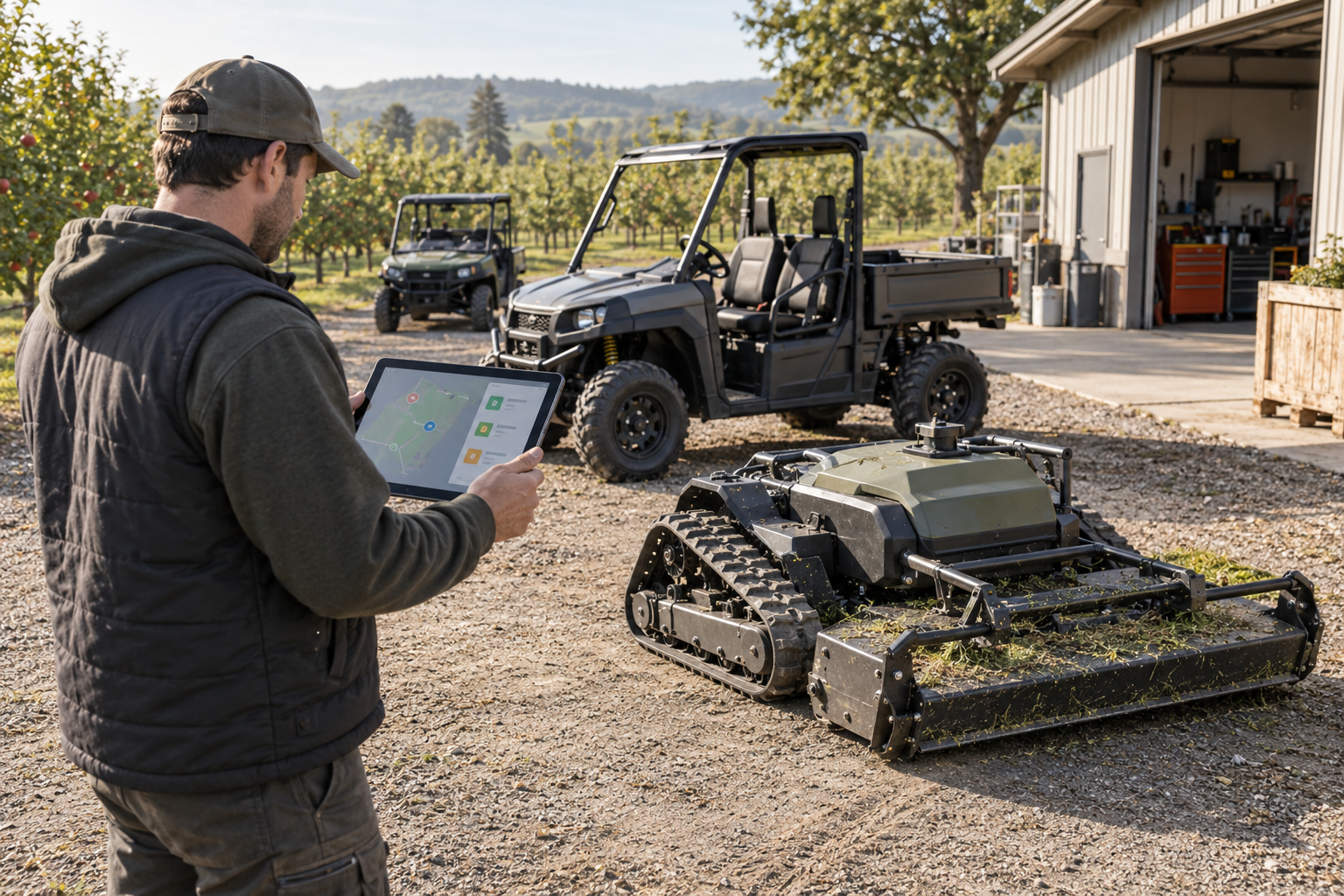
Present current location, work status, fault messages and historical records. The mowing-system overview also describes route playback and work-area/path management.
Use fault-code and threshold-based alerts to support service triage. Remote assistance can review relevant vehicle states and synchronize diagnostic records with the service system.
Agree the signal list, units, timestamps, acquisition rate, retention, connectivity and offline behavior before implementation. Satellite reception and cellular service availability vary by installation and operating area.
TECHNICAL OVERVIEW
Organize equipment, operators and work records. Review trips, operating time, route history and task status through a configured operations workflow.
Track the delivered equipment, configuration and service events over its operating life. Connect fault and maintenance records to the equipment identity.
The reference platform family includes charging, energy-storage and battery-swap management. Integrations depend on the installed infrastructure, metering and communication interfaces.
Use mileage, work time, fault history and other agreed signals to support operations analysis and maintenance planning. Reports reflect the available source data and chosen business rules.
TECHNICAL OVERVIEW
| Tool family | Workflow |
|---|---|
| Product management | Equipment identity, product/configuration information and lifecycle records |
| After-sales service | Diagnostic records, service cases, technical support and maintenance history |
| Quality management | Quality-process records and issue follow-up tied to product identity |
| APP / small-app customization | Task- and role-specific mobile interfaces for operators or service teams |
| CCP calibration tools | Controlled parameter access and engineering calibration workflows |
| OTA tools | Managed software delivery and update records for compatible control hardware |
| Remote diagnostics | Permission-managed assistance, diagnostic sessions and synchronized records |
| Autonomous-site supervision | Monitoring and coordination tools for a defined mine or other managed operating area |
Software updates and calibration should identify the target hardware, compatible version and authorized operator, with the vehicle in the required service state. Recovery behavior and acceptance checks are defined in the project.
TECHNICAL OVERVIEW
Separate onboard acquisition, communications, data processing and application views. A modular service architecture can connect operations, engineering and after-sales tools.
The material describes private-cloud delivery, scalable bandwidth, load balancing, access controls, backup and recovery. Hosting location, infrastructure provider, data ownership and service levels are contractual project choices.
Define the user roles, access policies, data recipients and retention rules for location, equipment and operator information. Remote changes and software delivery should be audited.
Source-platform references to Chinese emissions and vehicle reporting standards are not U.S. regulatory approvals. Applicable reporting, wireless and market-entry requirements are reviewed for the destination and exact product.
TECHNICAL OVERVIEW
Commercial mowers use work-area management, status monitoring and fault support. Farm and site UTVs can use vehicle data, energy management and service records. Commercial and mining vehicle projects can add network gateways, by-wire interfaces and site-supervision tooling.
Select the required hardware, software functions, hosting arrangement and service workflow as one project package.
START WITH YOUR WORKLOAD
Tell us the task, terrain, operating schedule, quantity and delivery destination. We can review equipment configurations, electrical modules and supporting technical information together.
PROJECT / MODULE / COMPONENT
INTERACTIVE FUNCTIONAL MAP
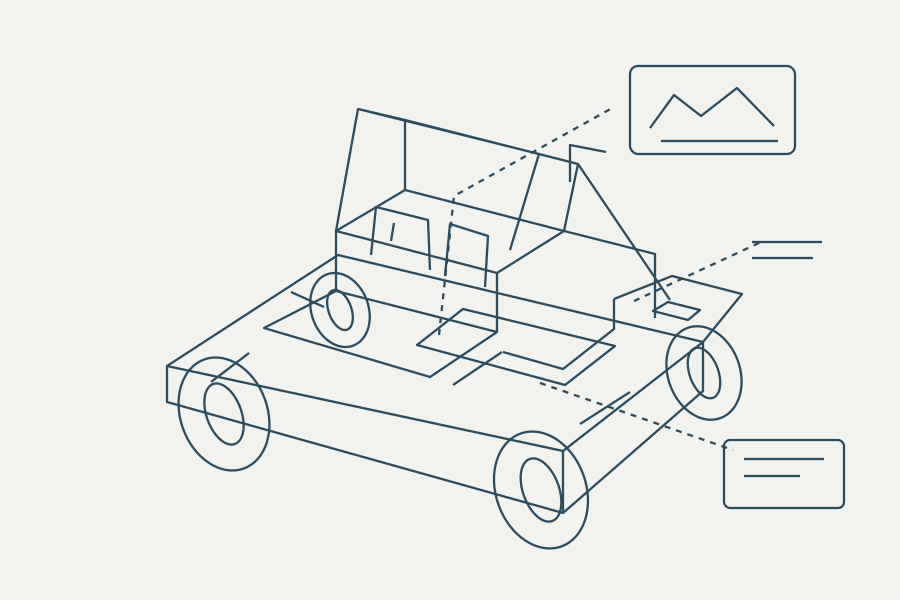
Select a numbered point or a module below. Locations are illustrative; the final installation drawing governs.